From a
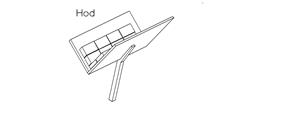
To
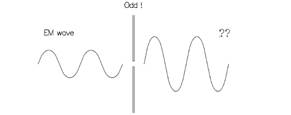
An odd EM wave
A memoir of Engineering Persistence and Human Discovery
A remarkable Journey from the UK via Germany, USA, Taiwan, and Canada.
Reminiscences on the human dimension of an engineering career.
Charts an unconventional engineering career spanning multiple continents and decades,offering insights rarely found in traditional engineering literature.
It starts at the age of fifteen on a building site (on the hod) and ends, as described by a reviewer, as a distinguished engineer having found an odd EM wave.
A reviewer described it as both heart warming and heart breaking.
It serves as an inspiration and a road map
D. A. Weston
Having failed the eleven plus examination I was in a secondary modern school and in the second stream not even the top stream. Those who passed the eleven plus went to a grammer school where the more academically gifted went and often ended in office jobs . One factor on going or not was if your parents were keen on you going to a grammer school, in which case there was some pressure to study and perhaps more books in the home. One reason to prefer a trade was because the pay was often better than an office job.
I had no encouragement from my parents who assumed I would go into a trade as my father had. I was fascinated by the transmission through the air of radio and television and when I was fifteen I built a radio. I put it in an OXO can but knew enough to leave the antenna outside of the metal can. When I told the school that I wanted to repair radios and television they said I would not be able to do that due to a lack of education and that I should work on a building site, which I did. I was a lb weaking and could only carry a half a hod of bricks, which made the brickies mad. I did then work mixing concrete which I could just about do. Only later working on radios, television, tape recorders and electronics.
One thing I did learn from a very encouraging teacher, was woodwork and I continued this as a hobby until recently. Some of the fine woodworking and lutherie I have done is shown as follows:
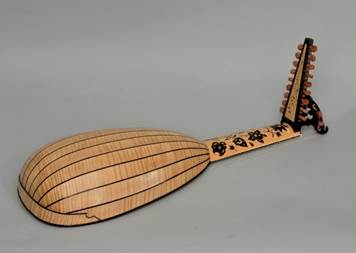
The back of a Baroque lute which is maple with ebony inlaid strips. The flowers are inlaid not painted on
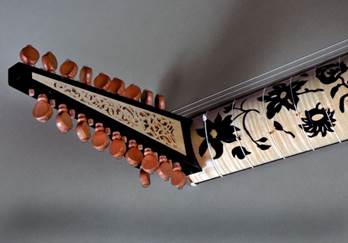
The neck and peg board. The flowers are inlaid not painted. The frets are tied cat gut.
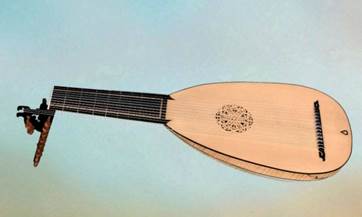
The fingerboard is ebony with inlaid maple. The soundboard is Picea Excelsior ( German Spruce) cut down in Switzerland in 1965
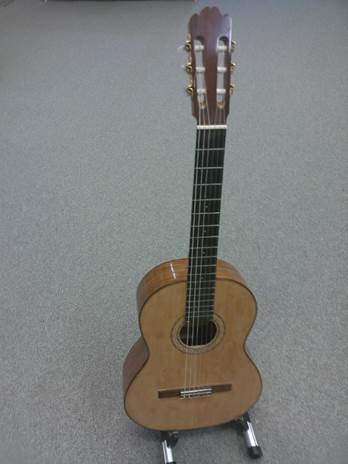
Classical guitar 1985. The soundboard is from the same stock as the lutes.
The back and sides are Indian rosewood.
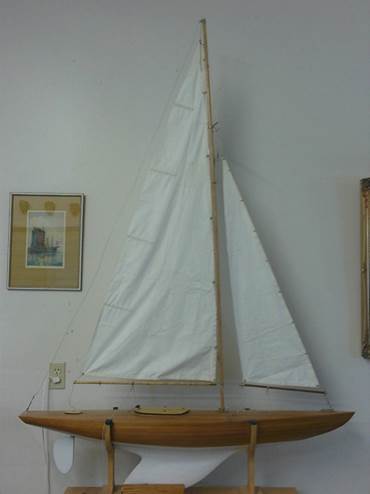
The 1920s style sailing boat In which the sails and rudder are radio-controlled

The traditional English trug.
 EMC books