To
An odd EM wave
A memoir of Engineering Persistence and Human Discovery
Reminiscences on the human dimension of an engineering career.
Charts an unconventional engineering career spanning multiple continents and decades, offering insights rarely found in traditional engineering literature.
It starts at the age of 15 on a building site in England and ends, as described by a reviewer, as a distinguished engineer
A reviewer describes it as both heart warming and heart breaking.
It serves as an inspiration and a practical roadmap.
D. A. Weston
I worked in Germany for six years until 1975. I visited East Germany twenty two times and wondered later when visiting the USA why immigration did not query twenty two visits to a communist country. I went to the East as they had all the museums, art galleries and Sanssouci, which is a historical building in Potsdam, near Berlin. Built by Prussian King
Frederick the Great as his summer palace. Also the food was inexpensive.
The buildings were covered in propaganda such as Socialism Our Way Is The Best Way.
I was totally[DW1] ignored no questions asked. Perhaps they were frightened by the authorities.
My German was improving and I knew this because I was no longer cheated in paying at a restaurant. West Berlin has a zoo. Not only is it the oldest and most frequently visited zoo
in the country, it is also now home to the largest variety of species of any zoo in the world
– including the only giant pandas in Germany!
Another attraction I visited often was the aquarium. Aquarium Berlin is one
of Europe’s best-known aquariums. Behind the building’s historic façade, many fish
and curious creatures are waiting to be discovered. I used to sit in the gloom and
watch the fish swim backwards and forwards, perhaps this gave me my interest in
watching fish when snorkeling and diving in Costa Rica, Mexico and Barbados.
When I lived there Berlin was a depressing place because it was surrounded by the
East. In 1948–1949 the Berlin Blockade was a pivotal Cold War crisis where the Soviet
Union blocked land/water access to Western-occupied Berlin to force surrender
of the city. The Western Allies responded with a massive, year-long airlift, delivering
1.5+ million tons of supplies until the blockade was lifted on May 12, 1949.
Seventy-eight pilots died during the Berlin airlift when their planes crashed as they
approached the city. The Berlin airlift monument, established in 1951,
commemorates their deaths.
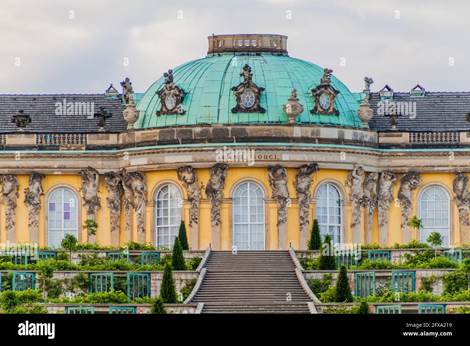
Sansouci
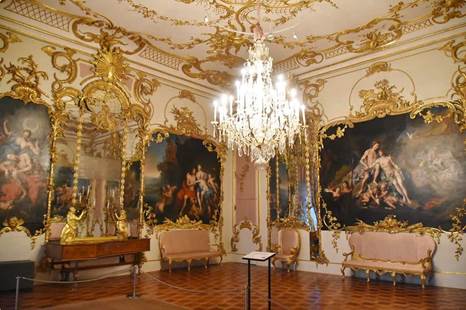
Sansouci

